

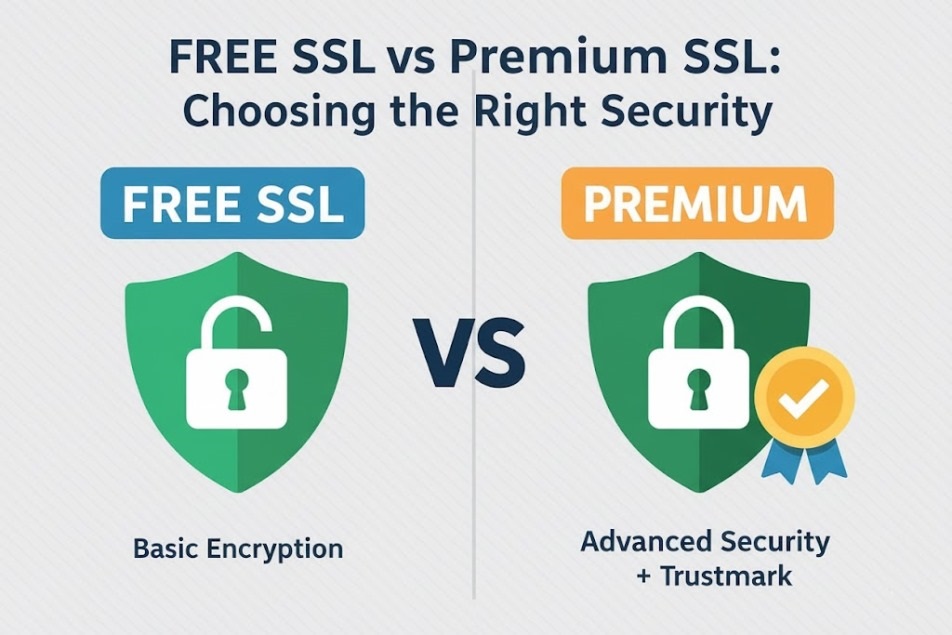
If you manage a website today, you have probably seen offers for “Premium SSL” or “Business SSL” being sold for $49, $79, or even $299 per year. At the same time, many hosting panels offer a free SSL with one click. This creates a common question:
- If SSL is available for free, why do companies still sell it?
- What SSL really does
- So why do companies sell SSL?
- Understanding the Three Types of SSL
- “Better security” is a myth
- What you’re actually paying for
- Who really needs a premium SSL
- You might need a paid SSL only if:
- SSL for Human Trust, Not Just Technical Security
- Who does NOT need a premium SSL?
- Is there any difference in SEO?
- Why browsers treat all SSL the same
- Security Through Smart Configuration
If SSL is available for free, why do companies still sell it?
The short answer:
Free SSL and premium SSL use the same level of encryption.
The difference is not security strength. The difference is extra business verification and support.
What SSL really does
An SSL certificate has one primary job:
Encrypt the connection between your visitor and your website.
Free SSL does this.
Premium SSL also does this.
The encryption is identical.
Once SSL is active, browsers show the padlock icon -🔒 – the padlock does not mean premium or budget. It only means secure.
So why do companies sell SSL?
At first glance it sounds confusing: one company gives SSL for free, and another sells it for $79 or $199 per year. The truth is that they are not selling encryption. They are selling verification and paperwork. The security level is the same, but a premium certificate includes a legal identity check for the business behind the site. That is why banks and big corporations sometimes pay for SSL, while normal website owners do not need to.
Understanding the Three Types of SSL
There are three practical levels of SSL on the web.
Free DV (Domain Validation) – the basic level is domain validation. This is what Let’s Encrypt provides for free. It simply confirms that you control the domain, which is all normal websites such as blogs, portfolios, small businesses and e-commerce need.
OV (Organization Validation) – the next level is organization validation. This verifies that the company legally exists as a registered business. It is often used by bigger companies or agencies that want a higher trust indicator. For example: medium-large businesses, agencies.
EV (Extended Validation) – The highest level is extended validation. This checks the company in detail and is used mostly by banks, financial platforms, or government services. It is a legal identity badge, not stronger encryption.
For most websites, a simple DV certificate is all you ever need, and Let’s Encrypt provides it for free. This is the same SSL technology used by millions of reputable websites, because it already delivers full encryption and browser trust without any cost. The idea that “premium means safer” is mostly a marketing message rather than a technical reality.
“Better security” is a myth
Many hosting companies try to upsell premium SSL by implying that it offers extra protection. In reality, the encryption strength of a free SSL and a paid SSL is exactly the same. Both protect user data from eavesdropping, both are trusted by every major browser, and both display the same padlock icon in the address bar. The difference is not in the security of the connection, but in the level of identity verification behind it.
What you’re actually paying for
When someone buys a premium SSL, they are not paying for more encryption. They are paying for verification paperwork and corporate-level support. A premium SSL usually includes three things: first, a legal identity check confirming the business exists as a registered company; second, a financial warranty in case the certificate authority is ever compromised; and third, support from the vendor. These extras are useful in regulated or high-liability environments, but unnecessary for normal websites.
Who really needs a premium SSL
A premium SSL only becomes relevant when a company must prove its legal identity, not just encrypt its traffic. Banks, insurance companies, payment processors, and government portals fall into this category because users — and regulators — expect a higher level of trust. For example, a banking login page or a licensed trading platform often uses an EV certificate specifically because it demonstrates not just a secure connection, but a legally verified owner behind the platform.
You might need a paid SSL only if:
✔ You operate in finance, banking, insurance
✔ You accept sensitive customer data for legal reasons
✔ You are a government or public service
✔ You need a legally verifiable company identity
✔ You need insurance coverage attached (for auditors/compliance)
Also Read: How to Resolve the ERR_SSL_PROTOCOL_ERROR
SSL for Human Trust, Not Just Technical Security
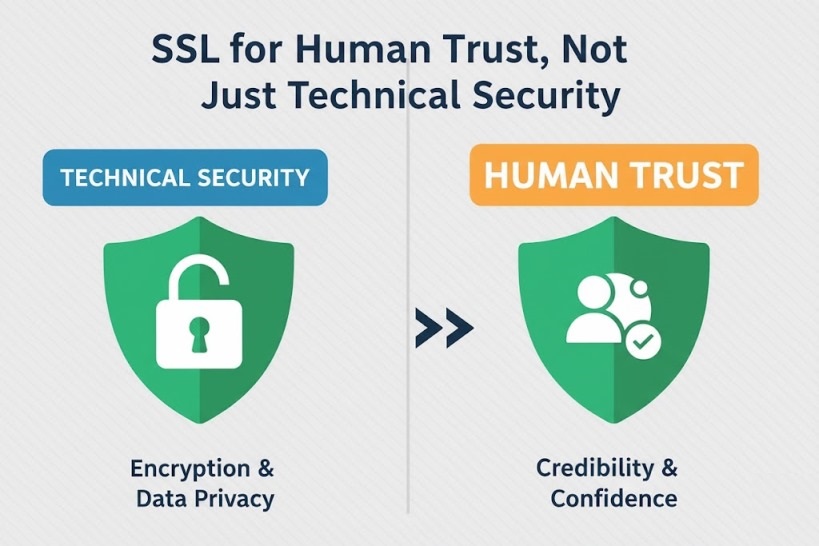
SSL is often associated with banking or corporate portals, but it plays an equally important role in platforms where emotional privacy matters. A personal connection service handles far more personal data than most people realize — photos, preferences, private conversations. The website platform also relies on SSL to keep these interactions confidential and user identities protected: Encryption here supports both safety and personal comfort.
Who does NOT need a premium SSL?
You do not need a paid SSL if your website is:
✔ A small-to-medium business
✔ A portfolio, landing page, or blog
✔ A WordPress store or booking system
✔ A SaaS startup getting early traffic
✔ Any normal website that just needs a secure HTTPS connection
For these, Let’s Encrypt is the correct and cost-efficient choice.
Is there any difference in SEO?
No difference.
Google only cares that HTTPS is active, not whether it is free or paid.
Why browsers treat all SSL the same
Chrome, Safari, Firefox and Edge no longer display extra trust badges for premium SSL certificates. This was a deliberate change in browser policy. In the past, EV SSL showed a full company name in the address bar. Today, that has mostly disappeared, because phishing sites started purchasing EV certificates too. In other words, users associated the padlock with safety — and browser vendors had to simplify and standardize the display.
Now the message is:
Encryption is either ON or OFF — there is no premium tier.
Security Through Smart Configuration
True website security is about how the server is managed, not how much the certificate costs. Visitors trust sites that are stable, consistent, and professionally maintained. When that standard is applied, if the connection shows a valid padlock, it is encrypted and safe. Anyone can verify this using public tools such as SSL Labs or SSL Checker.
