

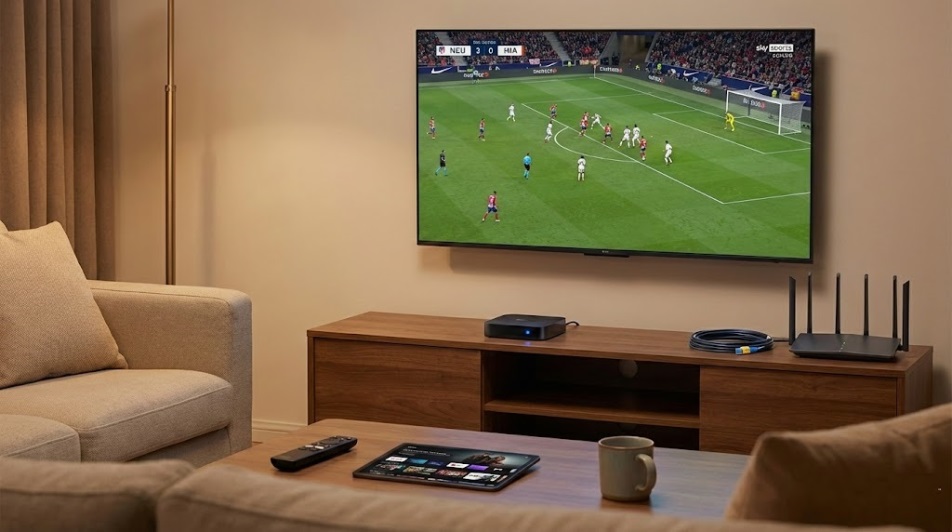
Watching live TV over the internet can be convenient, but it also introduces new failure points: unstable Wi‑Fi, overloaded home networks, underpowered streaming devices, and services that don’t invest in reliable delivery. This guide focuses on legal, widely available U.S. options that deliver live channels or live-like experiences over IP networks, plus a pragmatic checklist for reducing buffering.
If you’re searching terms like best iptv, you’ll see everything from legitimate platforms to questionable resellers. For safety and accuracy, this list emphasizes reputable, licensed services and the factors that actually determine whether playback stays smooth.
- What “Buffer‑Free” Really Means (and What No Provider Can Guarantee)
- Non‑Negotiables Before You Subscribe (USA Checklist)
- Best IPTV Services 2026: Legal, High‑Reliability Picks (U.S. Focus)
- Free, Legal Alternatives That Can Still Stream Smoothly
- How to Reduce Buffering: A Practical Setup Guide
- A Cautious Note on “Too‑Good‑to‑Be‑True” Offers
- Conclusion
- FAQs
What “Buffer‑Free” Really Means (and What No Provider Can Guarantee)
“Buffer‑free” is a goal, not a promise. Even top platforms can stutter if any link in the chain is weak:
- Your connection quality (latency, packet loss, jitter) matters as much as raw speed.
- Wi‑Fi interference (neighbors, walls, distance) causes drops that look like “service problems.”
- Device performance (old sticks/TV apps) can choke on high-bitrate streams.
- Content delivery capacity (CDNs, regional routing, peak-time load) varies by provider.
A trustworthy provider will be transparent about app support, streaming limits, and support channels—rather than making unrealistic claims.
Non‑Negotiables Before You Subscribe (USA Checklist)
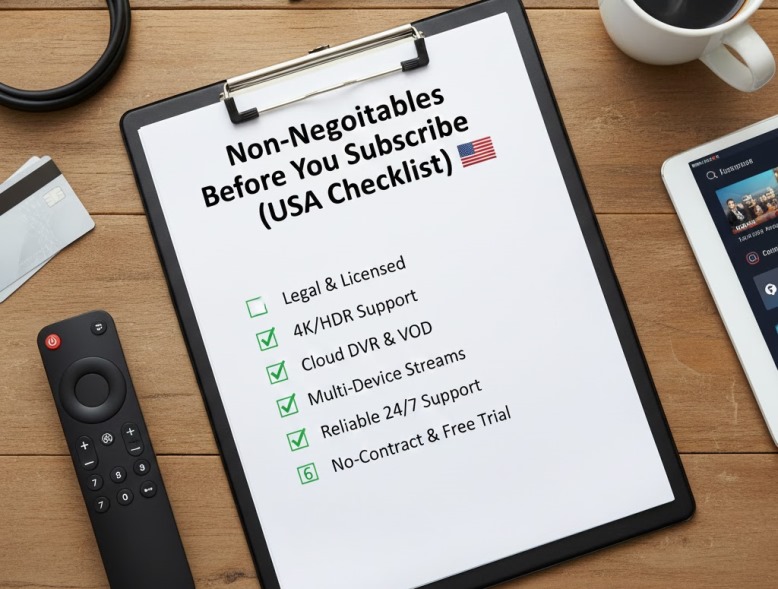
Use this checklist to avoid frustration and choose an option that fits your household:
1) Licensing and legitimacy
Stick with services that clearly state the networks they carry and operate as a recognizable business. This reduces the risk of sudden shutdowns and payment disputes.
2) App reliability and device support
Confirm support for your devices (Roku, Apple TV, Fire TV, Android TV/Google TV, iOS/Android). A stable app is often the difference between smooth streams and repeated crashes.
3) Network features that reduce buffering
Look for:
- Adaptive bitrate streaming (auto-adjusts quality to prevent stalls)
- DVR or restart features (lets you jump back if the live stream hiccups)
- Multiple CDN regions (helps during peak congestion)
4) Trial, refunds, and support
Prefer providers with clear cancellation steps, responsive support, and straightforward billing. Avoid vague “no refunds ever” policies.
(This is where many “iptv providers” fall short: opaque ownership, unstable apps, and no meaningful support.)
Best IPTV Services 2026: Legal, High‑Reliability Picks (U.S. Focus)
Below are mainstream services with track records for uptime, app quality, and customer support. Availability and channel lineups can vary by zip code, so always confirm locally.
1) YouTube TV
A strong all‑around choice for households that want a cable-like experience with a modern interface. It’s known for broad device support and a polished app experience. Best for viewers who want a major-network bundle without complex setup.
2) Hulu + Live TV
A practical option if you want live channels plus a large on‑demand catalog inside one ecosystem. Best for viewers who like having live TV and a deep library in one place, with a familiar app across devices.
3) Sling TV
Often a good fit if you want more control over cost and channel packs. Sling’s modular approach can reduce paying for channels you don’t watch. Best for budget-focused viewers who still want reputable delivery and mainstream app support.
4) DIRECTV STREAM
A more traditional “big bundle” experience delivered over the internet. It’s often considered when you want a fuller lineup and a cable-style feel, but without a satellite install. Best for viewers replacing full cable packages.
5) Fubo
Frequently chosen by sports-heavy households. While exact sports availability changes by market and rights, the platform is widely recognized for sports-forward packaging and mainstream device support. Best for fans who prioritize live sports coverage.
6) Philo
A simpler, entertainment-focused service that can work well if you don’t need the big sports-and-news mix. Best for viewers who want a leaner live package and straightforward streaming.
Also Read:
Free, Legal Alternatives That Can Still Stream Smoothly
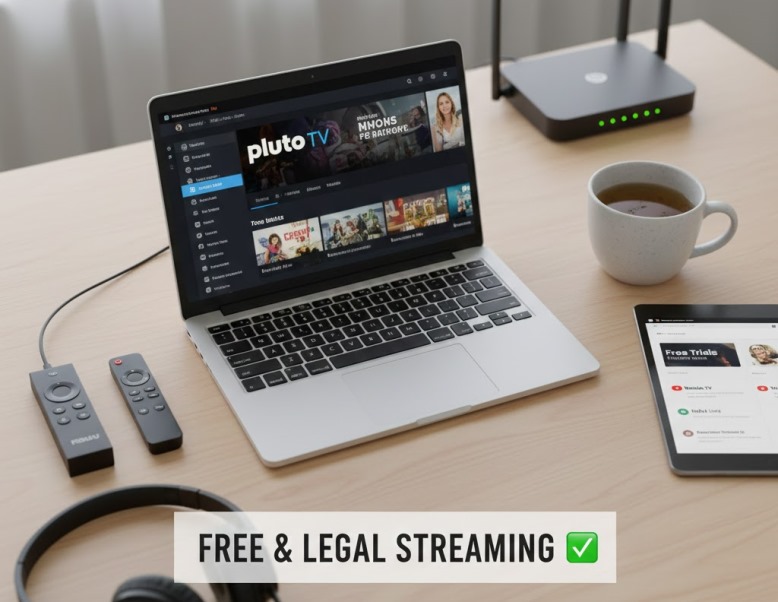
If your goal is “live-like” channel surfing without a big monthly bill, consider legal FAST (Free Ad‑Supported Streaming TV) apps. They’re not replacements for every cable channel, but they can be stable and surprisingly useful:
- Pluto TV
- Tubi
- Amazon Freevee
- Xumo Play
These can reduce reliance on paid live TV by covering background viewing, classic shows, and niche “channel” formats.
How to Reduce Buffering: A Practical Setup Guide
To get the most stable experience from any iptv services platform, focus on your home setup first:
Use Ethernet when possible
A wired connection is the single most effective buffering fix—especially for live TV.
If you must use Wi‑Fi
- Prefer 5 GHz or Wi‑Fi 6/6E bands when available
- Place your router in a central location
- Avoid streaming far from the router through multiple walls
Upgrade the streaming device before blaming the service
A modern streaming box can outperform many built‑in smart TV apps. If your TV is slow, consider a dedicated device.
Reduce network competition
Live streams suffer when someone is uploading large files or gaming on congested connections. Use router QoS (if available) to prioritize streaming.
Test for packet loss, not just speed
A speed test can look “fine” while packet loss causes constant buffering. If buffering persists, ask your ISP about line quality and routing.
A Cautious Note on “Too‑Good‑to‑Be‑True” Offers
If a site promises every premium channel and every pay‑per‑view for a tiny price, that’s a major red flag. Services that can’t clearly explain licensing and support are risky—technically and legally. For most households, the best iptv service is the one that’s legitimate, stable, and cancelable—not the one with the most exaggerated claims.
(When comparing any iptv service, prioritize transparency, app stability, and billing safety over hype.)
Conclusion
A “buffer‑free” experience in 2026 comes from two things working together: a reputable platform with strong delivery infrastructure and a home setup that minimizes Wi‑Fi instability, device slowdowns, and network congestion. Start with legal, mainstream services, verify local channel availability, and treat your router and streaming device as part of the solution. Done right, you can get reliable live TV over IP without the uncertainty that comes with sketchy providers.
FAQs
1) Can I use a travel router to improve streaming stability in hotels or rentals?
Yes—using a travel router can create a consistent Wi‑Fi network for your devices, reduce reconnection issues, and let you manage settings like band selection and device priority. It won’t fix a bad hotel internet connection, but it can make unstable setups more predictable.
2) What’s the safest way to manage streaming subscriptions to avoid surprise charges?
Use a dedicated payment method with strong controls (virtual card or a separate card), turn on billing alerts, and cancel inside the provider’s account page—not just by deleting the app. Keep screenshots or confirmation emails of cancellations.
3) Are streaming “aggregator” apps safe to log into with my TV provider credentials?
Only if the app is from a well-known, legitimate company and uses official sign-in methods. Avoid unknown apps asking for credentials directly; use official app stores and verify the publisher to reduce account and privacy risks.
